
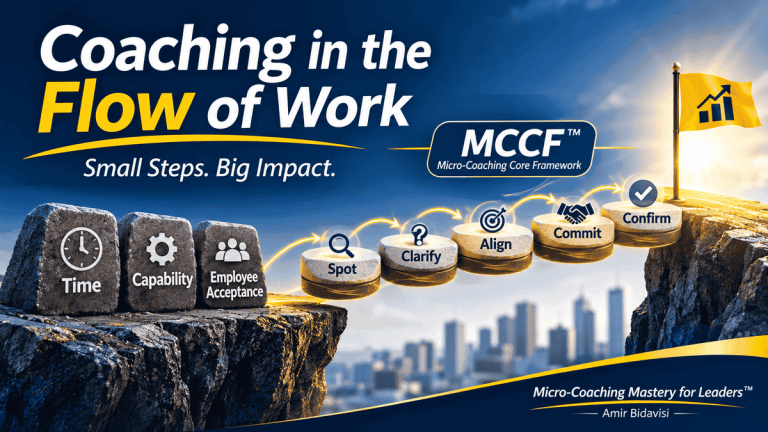
Coaching in the Flow of Work: A Design Problem, Not a Training Problem
Rethinking How Leaders Coach in Everyday Work I teach coaching…


Stop waiting for formal coaching sessions. Micro-coaching enables leaders to address friction in real time, boost performance, and keep teams moving forward.
Rethinking How Leaders Coach in Everyday Work I teach coaching…
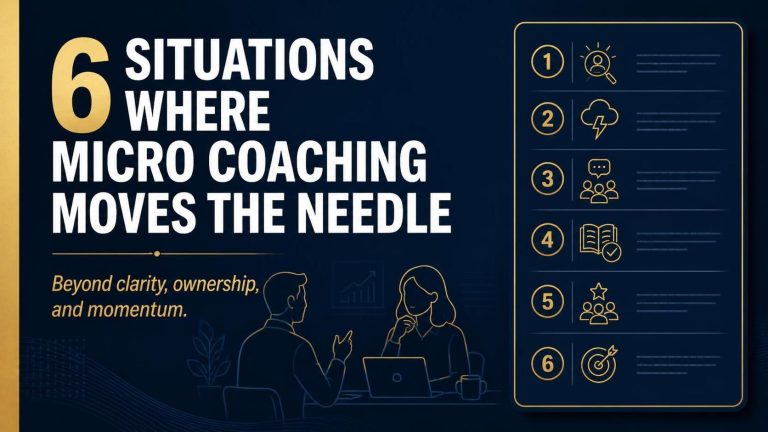
When Micro Coaching Situations Deliver the Greatest Impact Beyond clarity,…

How managers can use behavioral cues to identify potential obstacles…
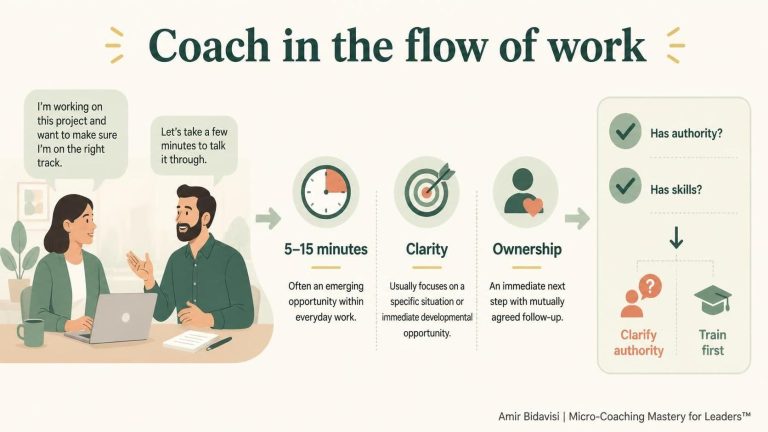
Most leaders intuitively know they should coach their teams more…
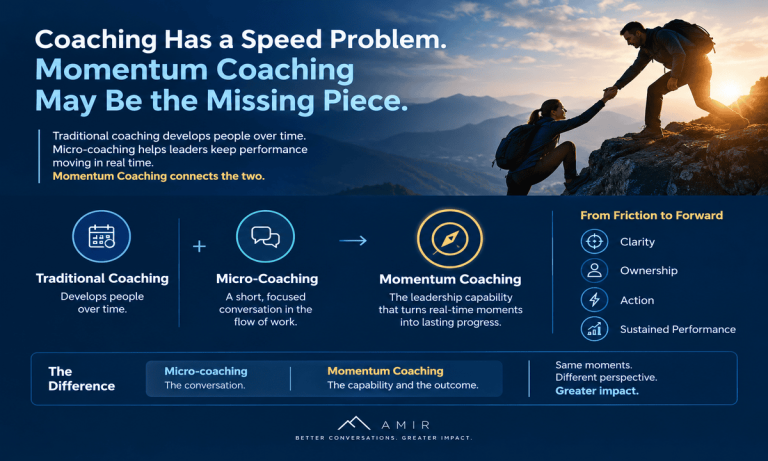
Coaching has a speed problem. Traditional coaching develops people over time; micro-coaching keeps performance moving in real time. The bigger opportunity is Momentum Coaching: short, focused conversations in the flow of work that turn confusion into clarity, hesitation into action, and dependency into ownership. Micro-coaching is the conversation. Momentum Coaching is the capability—and the outcome.

Most micro coaching advice gives you tactics. This article explains why a toolkit isn’t enough—and what leaders need instead. It outlines a five-stage approach to deciding when to coach, creating shared clarity, turning insight into owned action, and following through. Read to see how it works in real conversations.

Friction shows up daily as hesitation, overload, or quiet withdrawal. These are coaching signals. Micro-coaching addresses them in real time—without replacing HR, L&D, or formal coaching.

When leaders ask coaching questions but have already decided, they create role confusion and erode trust. Learn how to keep coaching, teaching, and directing separate—so each leadership move lands cleanly and the person can actually think.

Micro coaching is not just shorter coaching. It is a leadership tool for preserving momentum in real time. Learn how to coach in the flow of work—without replacing formal coaching or becoming a full-time coach.